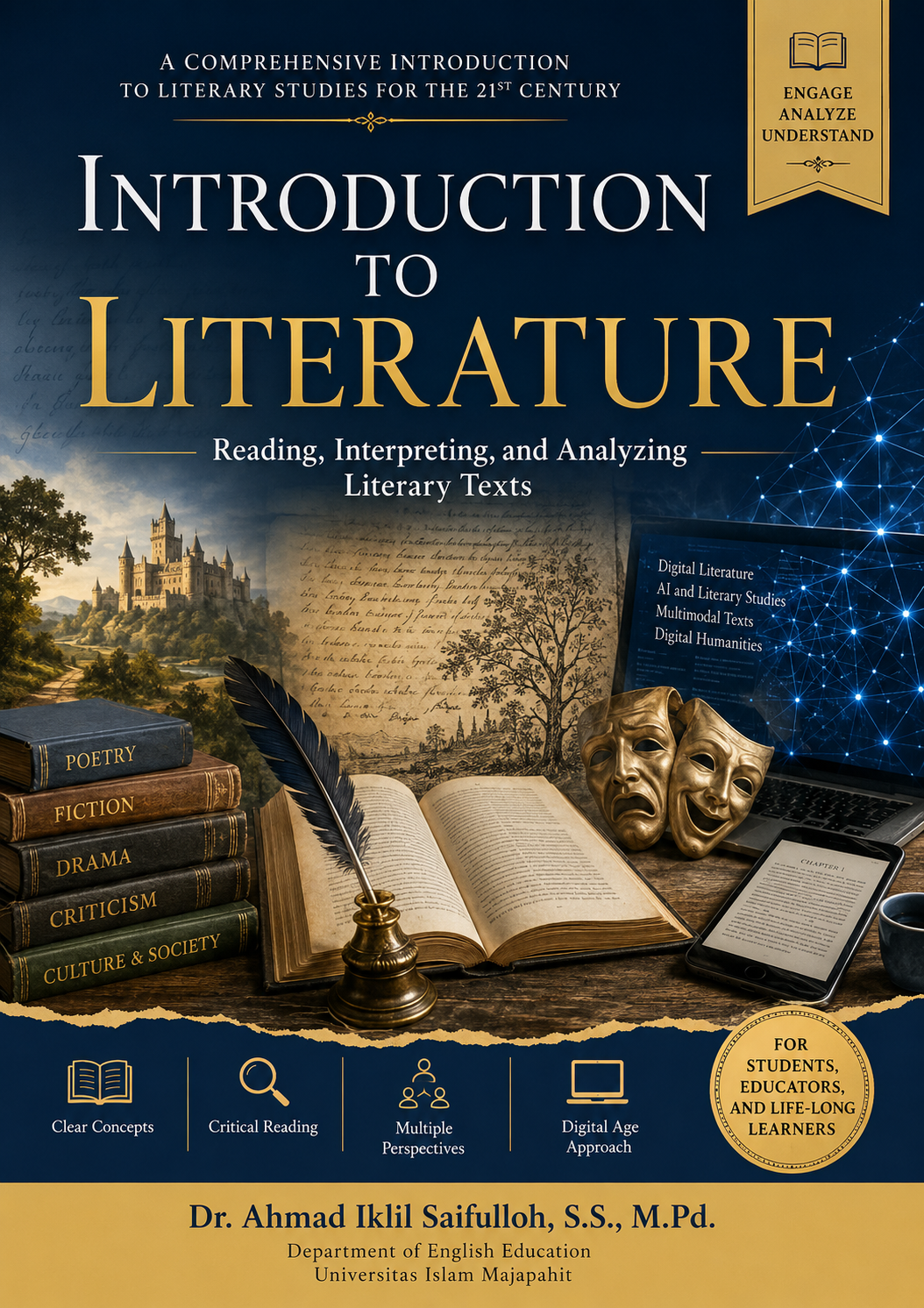
Introduction to Literature: Reading, Interpreting, and Analyzing Literary Texts
Abstract
This book, Introduction to Literature: Reading, Interpreting, and Analyzing Literary Texts, has been written primarily for undergraduate students of English Language Education, English Literature, and related fields who are beginning their academic journey in literary studies. The book is also intended to serve as a practical reference for lecturers, researchers, and general readers seeking a systematic introduction to literary analysis. Rather than presenting literature merely as a collection of theories or historical facts, this book encourages readers to approach literary texts as dynamic cultural artifacts that invite interpretation, critical reflection, and intellectual dialogue.
One distinctive feature of this textbook is its integration of foundational literary concepts with contemporary developments in literary scholarship. The book begins by introducing the nature and functions of literature before examining literary genres, intrinsic elements, literary language, and methods of interpretation. Subsequent chapters guide readers through the critical reading of poetry, fiction, and drama while introducing major schools of literary criticism, including Formalism, Reader-Response Theory, Psychoanalytic Criticism, Marxist Criticism, Feminist Criticism, Postcolonial Criticism, and Ecocriticism. The final chapters extend literary discussion into broader contexts by exploring literature's relationship with society, digital technologies, artificial intelligence, and academic literary research.
Unlike many introductory textbooks that separate literary theory from literary practice, this book intentionally integrates conceptual understanding with practical literary analysis. Throughout the chapters, readers are encouraged to engage in close reading, evaluate textual evidence, compare theoretical perspectives, and develop well-supported literary interpretations. This pedagogical approach aims to help students bridge the gap between theoretical knowledge and analytical application, thereby strengthening both their academic competence and critical literacy.
The inclusion of topics such as digital literature, multimodal storytelling, digital humanities, and artificial intelligence reflects the rapidly changing landscape of literary studies. Contemporary readers increasingly encounter literary texts across digital platforms, while emerging technologies continue to reshape both literary production and literary criticism. By introducing these developments alongside traditional literary approaches, the book seeks to prepare students for the evolving nature of literary scholarship in the digital era.
The organization of this book has been designed to support progressive learning. Each chapter begins with clearly stated learning outcomes, followed by conceptual discussions supported by scholarly references, illustrative examples, chapter summaries, discussion questions, and recommended readings. This structure allows students not only to understand theoretical concepts but also to apply them critically to literary texts from diverse cultural and historical contexts.
This textbook would not have been completed without the inspiration provided by generations of literary scholars whose works continue to shape contemporary literary studies. Their contributions have provided the theoretical foundations upon which this book is built. Nevertheless, any shortcomings, limitations, or inaccuracies that may remain are entirely the responsibility of the author. Constructive suggestions from lecturers, researchers, reviewers, and students are sincerely welcomed for future revisions and improvements.